
More details
Collapse details
Date Published:
Filesize:
- January 1, 2018
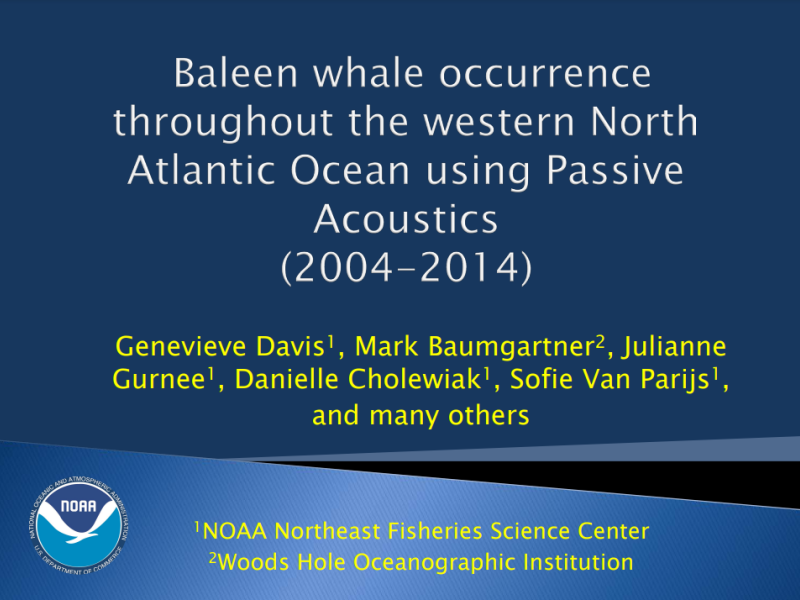
Passive acoustic monitoring was conducted using High-frequency Acoustic Recording Packages (HARPs) deployed in waters offshore of Virginia, North Carolina, and Florida with support from the US Navy during 2016 - 2017. The HARPs recorded underwater sounds between 10 Hz and 100 kHz. Data analysis consisted of analyst scans of long-term spectral averages (LTSAs) and spectrograms, and automated computer algorithm detection when possible. Three frequency bands were analyzed for marine mammal vocalizations and anthropogenic sounds: (1) Lowfrequency, between 10-1000 Hz, (2) Mid-frequency, between 1,000-5,000 Hz, and (3) Highfrequency, between 1-100 kHz.
- 5,208.04 KB
- Blue whale
- Bryde's whale
- Fin whale
- Minke whale
- North Atlantic right whale
- Sei whale
- Atlantic white-sided dolphin
- Blainville's beaked whale
- Bottlenose dolphin
- Clymene dolphin
- Common dolphin
- Goose-beaked whale
- Dwarf sperm whale
- False killer whale
- Gervais' beaked whale
- Killer whale
- Northern bottlenose whale
- Risso's dolphin
- Rough-toothed dolphin
- Short-finned pilot whale
- Sowerby's beaked whale
- Sperm whale
- Spotted dolphin
- Striped dolphin
Models Incorporating Non-Stationarity Improve Detection of Climate-Driven Range Shifts in Odontocetes.
Diversity and Distributions. 2026.
32 (2)
More details
Collapse details
Date Published:
- March 12, 2026
More details
Collapse details
Date Published:
Filesize:
- March 22, 2022
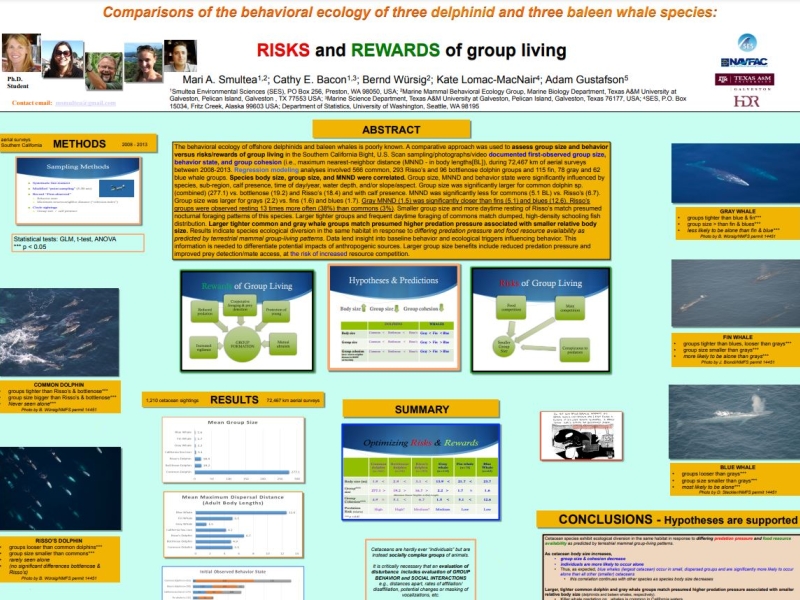
The United States (US) Navy uses lookouts (LOs) to detect objects in the water in the vicinity of ships. One class of object that LOs are trained to detect is marine mammals ; this forms an important component of the Navy’s procedures for marine mammal mitigation during training activities . As well as dedications of marine mammals by these LOs, detections of marine mammals may also be made by other members of the ship’s crew such as officers on the bridge (“watchstanders”) or sonar technicians, although acoustic detections require visual confirmation. We refer to these personnel together as the “lookout team” (LT). The primary goal of this project was to determine how effective LTs are at detecting marin
- 4,078.84 KB
- California sea lion
- Green turtle
- Leatherback turtle
- Loggerhead turtle
- Kemp's Ridley turtle
- Blue whale
- Fin whale
- Humpback whale
- Minke whale
- Atlantic white-sided dolphin
- Common dolphin
- Harbor porpoise
- Killer whale
- Pantropical spotted dolphin
- Pilot whale
- Risso's dolphin
- Rough-toothed dolphin
- Short-finned pilot whale
- Sperm whale
- Spotted dolphin
- Striped dolphin
More details
Collapse details
Date Published:
Filesize:
- January 1, 2020
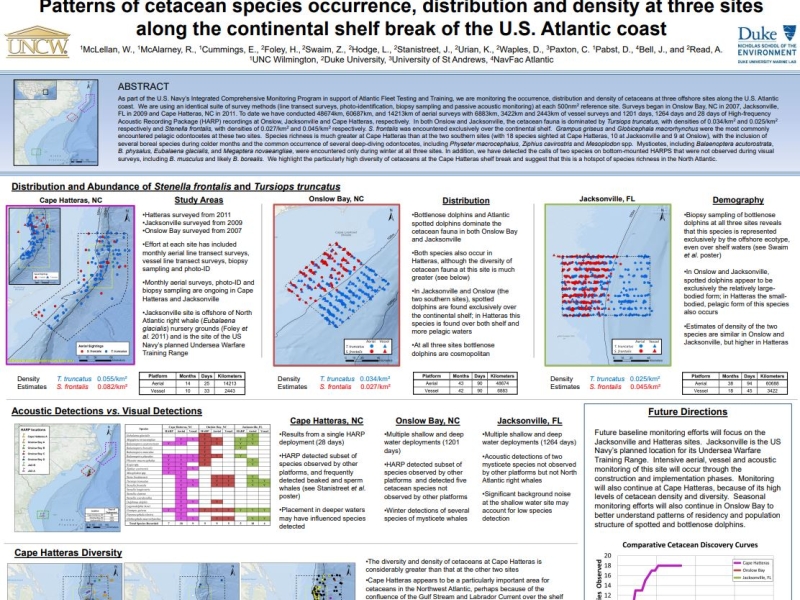
Long-term high-frequency acoustic recording packages (HARPs) at eight sites along the western North Atlantic shelf break.
- 1,430.35 KB
- Blue whale
- Fin whale
- Humpback whale
- North Atlantic right whale
- Sei whale
- Atlantic white-sided dolphin
- Blainville's beaked whale
- Bottlenose dolphin
- Common dolphin
- Goose-beaked whale
- False killer whale
- Gervais' beaked whale
- Killer whale
- Northern bottlenose whale
- Pilot whale
- Rough-toothed dolphin
- Short-finned pilot whale
- Sowerby's beaked whale
- Sperm whale
- Spotted dolphin
- Striped dolphin
- True's beaked whale
Complete
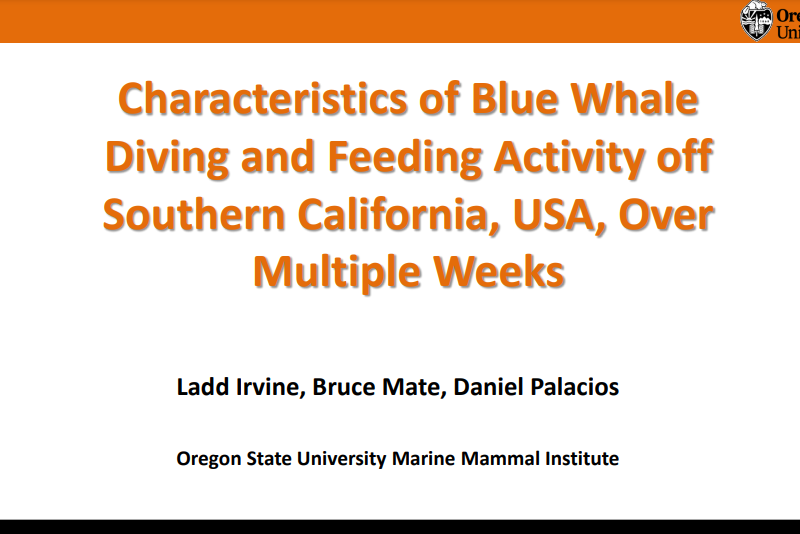
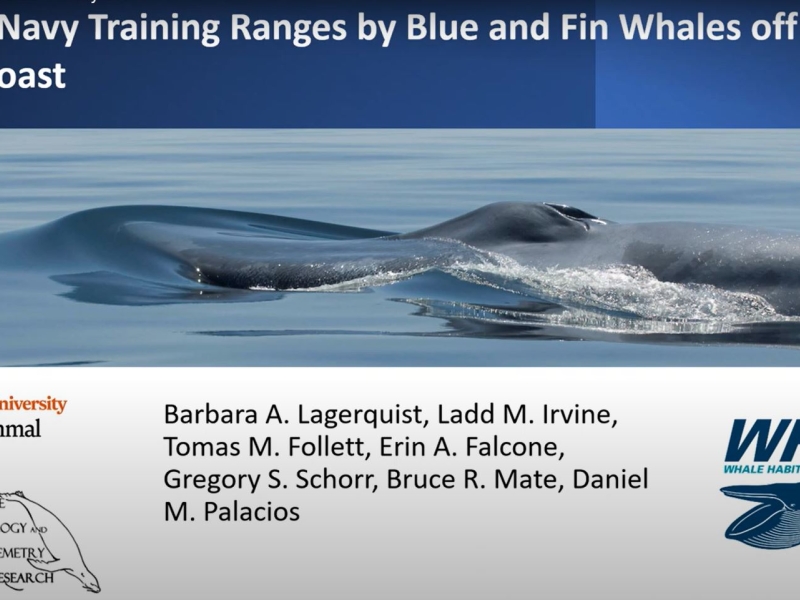
Blue and Fin Whale Satellite Tagging
Project Objectives
Determine the movement patterns, occurrence, and residence times of blue whales and fin whales within U.S. Navy training and testing areas as well as Biologically Important Areas along the U.S. West Coast
Current
Gulf of Alaska Acoustic Moorings and Analysis
Project Objectives
Conduct systematic line transect survey for marine mammals for density estimates; conduct survey to determine ecotype identity of killer whales; analyze existing and newly collected data for seasonal occurrence, abundance, and density of cetacean
Current
Long Term Acoustic Monitoring of Marine Mammals Utilizing the Instrumented Range at Pacific Missile Range Facility (PMRF)
Project Objectives
Improve understanding of the long term trends in occurrence of marine mammals (e.g., minke, humpback, fin, Bryde's, Blainville's) on the PMRF range. Examine what, if any, acoustic and physical behavioral responses occur to Navy activities.
Current
Marine Mammal Sightings During CalCOFI Cruises
Project Objectives
Determine what species and populations of marine mammals are present in Southern California and estimate the abundance and density across seasons
Current
Mid-Atlantic Nearshore & Mid-shelf Baleen Whale Monitoring
Project Objectives
Assess occurrence, habitat use, and baseline behavior of baleen whales in the mid-Atlantic region
Complete
Passive Acoustic Monitoring of Marine Mammals in the Gulf of Alaska
Project Objectives
Determine the spatial distribution and occurrence of beaked whales, other odontocetes, and baleen whales in offshore areas using bottom-mounted passive acoustic recorders and deep-diving autonomous gliders
Complete
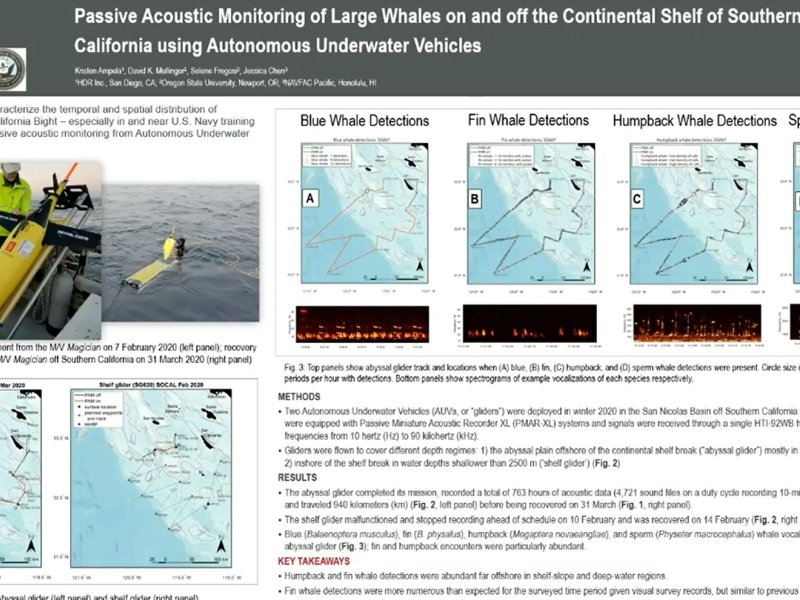
Passive Acoustic Monitoring of Marine Mammals Using Autonomous Underwater Vehicles in Southern California
Project Objectives
Explore presence of marine mammals in less-surveyed, offshore areas
Current
Southern California Beaked Whale Occurrence (formerly "Passive Acoustic Monitoring of Marine Mammals in Southern California Range Complex (SOCAL)")
Project Objectives
Determine the distribution and temporal patterns of beaked whale occurrence in the waters within and outside the Southern California Range Complex (SOCAL). Use passive acoustic monitoring to determine what species are present in SOCAL and examine spatial and temporal patterns.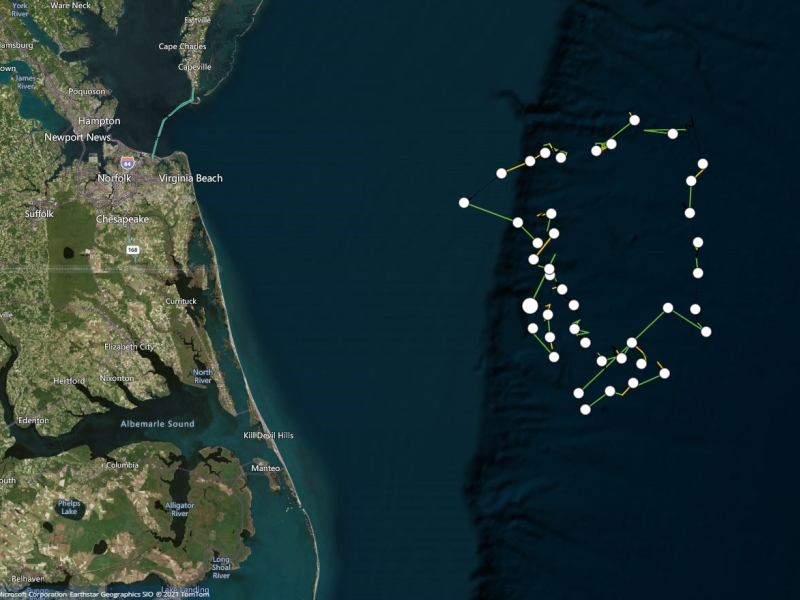
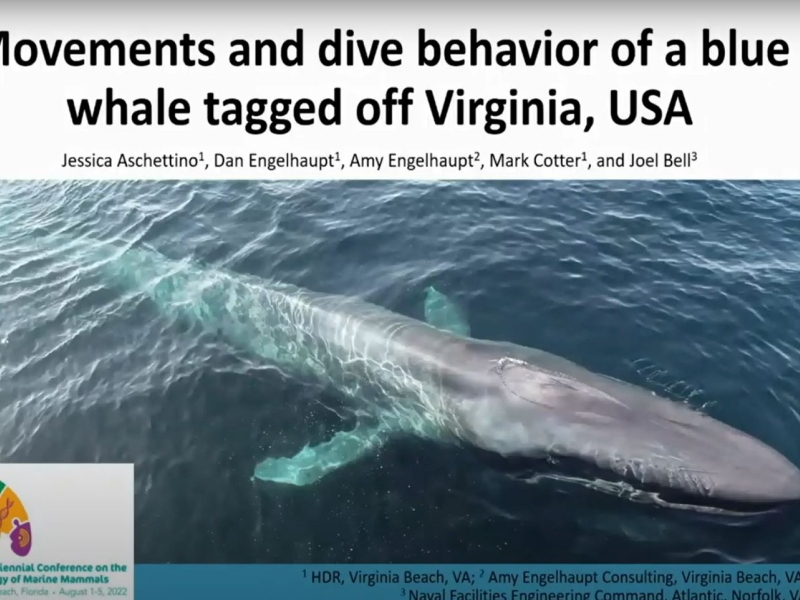
Blue whale tagged off the coast of Virginia
April 26, 2021
Details on the first blue whale tagged in the region.
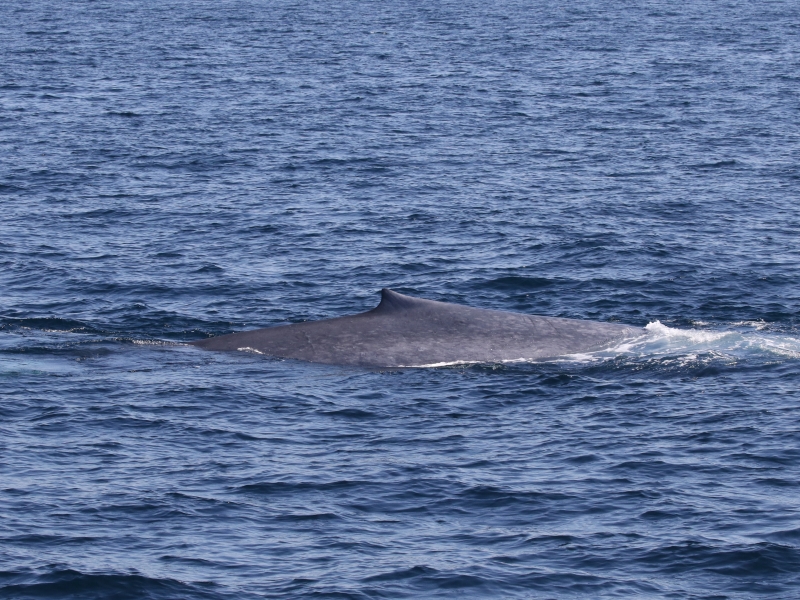
Drone footage of a blue whale off the coast of Virginia!
March 14, 2021
Blue whale footage from Virginia
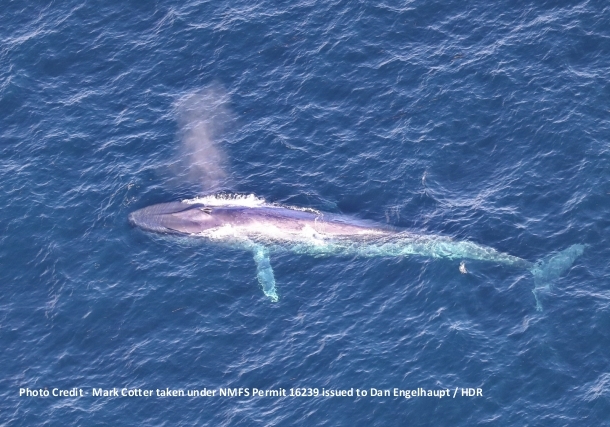
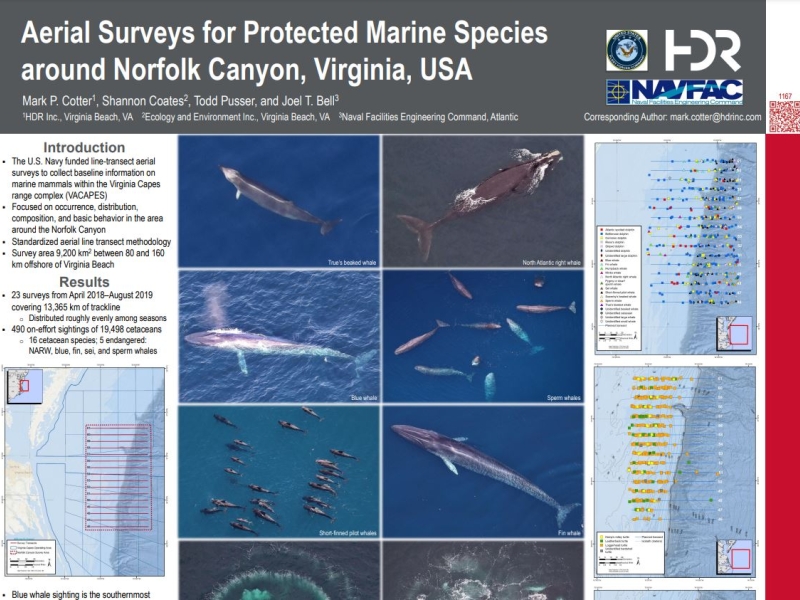
Fin and blue whale feeding aggregation observed in Norfolk Canyon study area
March 26, 2019
Baleen whale feeding assemblage offshore of Virginia.
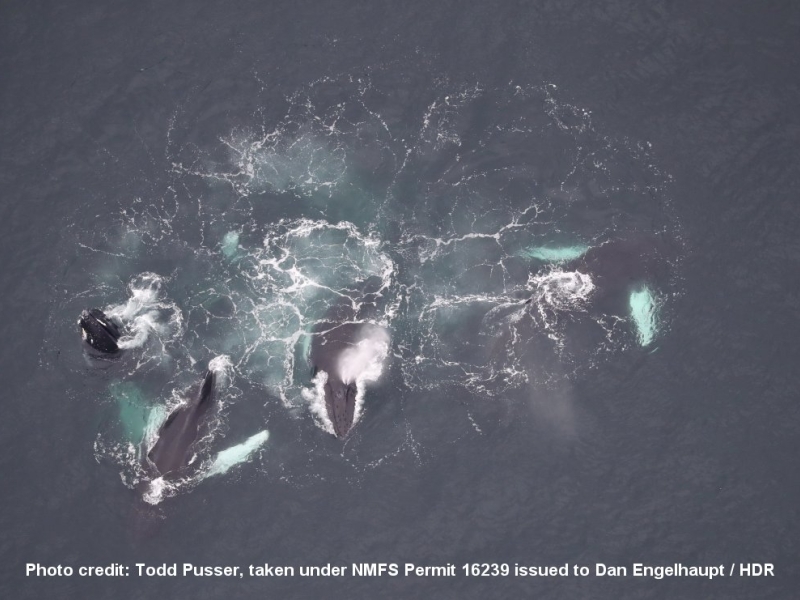
Blue whales and sei whales and right whales - OH MY!!!
April 18, 2018
A spring aggregation of endangered whales offshore.